
Ultrasound-guided fine needle aspiration biopsy utilizes CPT codes 10005 (first lesion) and 10006 (each additional lesion) for accurate thyroid nodule evaluation and billing.
CPT code 76536 is used for thyroid ultrasounds, while 60100 represents percutaneous core biopsy, and 60661 covers ablation procedures.
What is an Ultrasound-Guided Thyroid Biopsy?
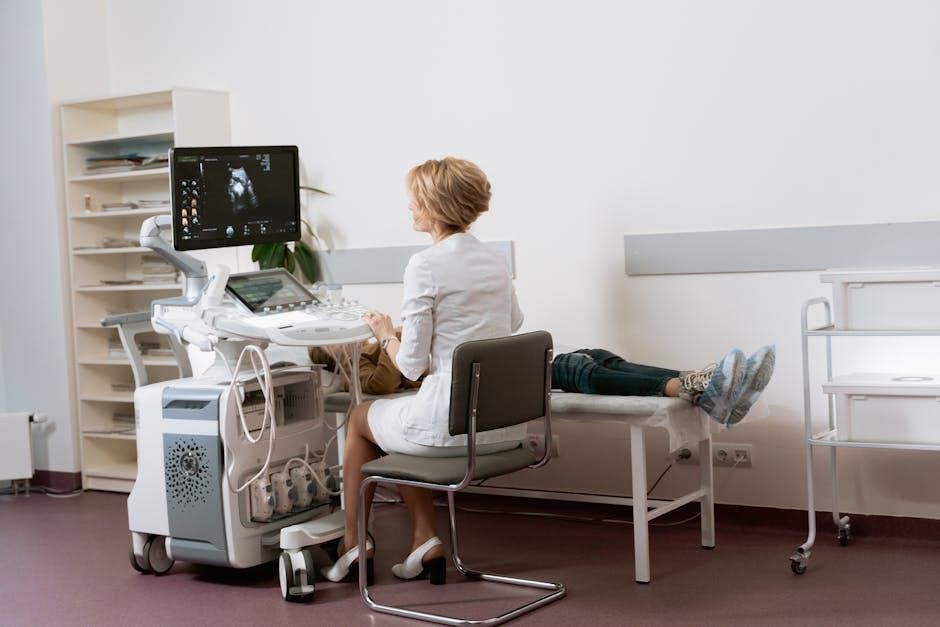
Ultrasound-guided fine needle aspiration (FNA) biopsy is a minimally invasive procedure used to evaluate suspicious nodules within the thyroid gland. Real-time ultrasound imaging allows physicians to precisely visualize the nodule and guide a thin needle for sample collection.
This technique enhances accuracy, minimizing the risk of sampling errors and ensuring targeted aspiration of the area of concern. The collected cells are then examined under a microscope by a cytopathologist to determine if they are benign or malignant. CPT codes, such as 10005 for the initial lesion and 10006 for each additional lesion biopsied during the same session, are crucial for proper billing and coding of this procedure.
The procedure aids in diagnosing thyroid cancer and guiding appropriate treatment decisions.
Why is Ultrasound Guidance Important?
Ultrasound guidance is paramount in thyroid FNA biopsy due to the small size and deep location of many thyroid nodules. Without imaging, accurately targeting the suspicious area becomes significantly challenging, potentially leading to misdiagnosis or non-diagnostic samples.
Ultrasound allows for real-time visualization, ensuring the needle is precisely positioned within the nodule, even those that are non-palpable. This improves sample quality and diagnostic yield. Proper CPT coding, utilizing codes like 10005 and 10006, reflects the added skill and precision provided by ultrasound guidance.
It also minimizes the risk of damaging surrounding structures, enhancing patient safety and procedural success.
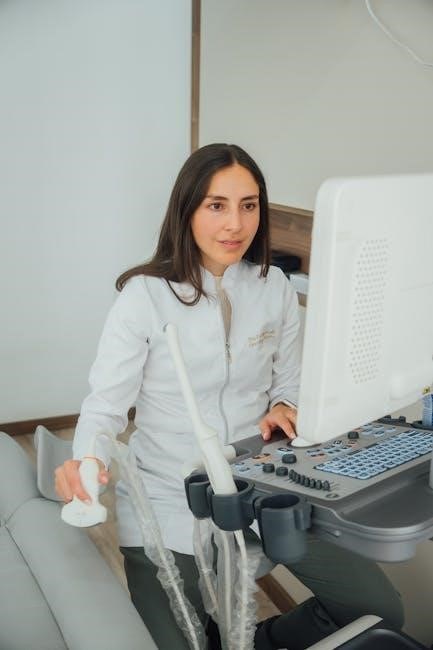
CPT Codes for Thyroid Biopsy Procedures
CPT codes 10005 (first lesion), 10006 (each additional lesion), and 60100 (core biopsy) are essential for billing ultrasound-guided thyroid procedures accurately.
CPT Code 10005: Fine Needle Aspiration Biopsy, First Lesion
CPT code 10005 specifically represents a fine needle aspiration (FNA) biopsy of the thyroid, crucially including ultrasound guidance. This code is utilized when a physician performs an FNA on the very first suspicious lesion identified within the thyroid gland during a single session;
The ultrasound guidance component is integral to this code; it ensures accurate needle placement, maximizing diagnostic yield and minimizing patient discomfort. Proper documentation must clearly indicate the use of ultrasound during the procedure. This code is the foundational element when billing for multiple thyroid nodule aspirations performed in the same encounter, with subsequent lesions billed using code 10006.
Accurate application of 10005 is vital for appropriate reimbursement and reflects the skill and precision involved in ultrasound-guided FNA.
CPT Code 10006: Each Additional Lesion
CPT code 10006 is an add-on code, meaning it cannot be billed alone. It’s reported in conjunction with 10005 when a physician aspirates additional thyroid lesions during the same session as the initial FNA. Each subsequent nodule requiring aspiration necessitates the use of 10006, accurately reflecting the increased work and time involved.
Like 10005, ultrasound guidance is a fundamental component of this procedure and must be documented. The documentation should clearly delineate each aspirated lesion, confirming the use of 10006 for each one beyond the first.
Correct coding requires a clear understanding that 10006 represents each additional lesion, ensuring appropriate reimbursement for comprehensive thyroid evaluations.
Understanding the “Each Additional Lesion” Concept
The “each additional lesion” concept, embodied by CPT code 10006, is crucial for accurate billing of ultrasound-guided thyroid biopsies. It acknowledges that evaluating multiple nodules during a single session demands more physician time and skill than a single lesion biopsy.
Essentially, 10005 covers the initial nodule, while 10006 is appended for every subsequent nodule aspirated during the same encounter. This isn’t simply about quantity; it reflects the increased complexity of navigating different nodule locations and characteristics.
Proper documentation is paramount, clearly identifying each aspirated lesion to justify the use of 10006. Failure to do so can lead to claim denials and underpayment.
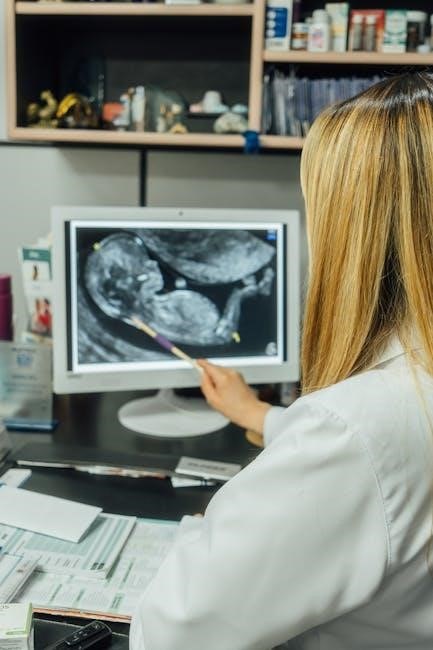
Detailed Breakdown of CPT Code Usage
CPT codes 10005 and 10006 are utilized for ultrasound-guided thyroid FNA, while 60100 applies to core biopsies, ensuring precise procedure coding.
Biopsy of a Single Thyroid Nodule
When performing an ultrasound-guided fine needle aspiration (FNA) biopsy on a single thyroid nodule, the primary CPT code to report is 10005. This code specifically covers the procedure, including the crucial ultrasound guidance component. It’s essential to document in the procedure notes that only one nodule was biopsied to support the use of this code.
Accurate documentation is paramount for successful claim submissions. Ensure the report clearly states the nodule’s location (right or left lobe) and size. Avoid any ambiguity that might suggest multiple lesions were addressed. Proper coding prevents potential denials and ensures appropriate reimbursement for the service rendered. Remember, CPT code 10005 is the cornerstone for single nodule biopsies.
Biopsy of Multiple Thyroid Nodules (Same Session)
When biopsying multiple thyroid nodules during the same session, CPT code 10005 is utilized for the initial lesion, and 10006 is appended for each additional nodule biopsied. This “each additional lesion” concept is crucial for accurate billing. Thorough documentation is vital, clearly outlining each nodule’s location, size, and the fact that it underwent separate FNA.
For example, if three nodules are biopsied, you would report 10005 followed by two instances of 10006. Failure to accurately report each lesion can lead to claim denials. Ensure the procedure report explicitly details the number of nodules targeted and the corresponding biopsies performed. Proper coding maximizes reimbursement and reflects the work performed.
CPT Code 60100: Percutaneous Core Biopsy of the Thyroid
CPT code 60100 describes a percutaneous core biopsy of the thyroid, differing from the fine needle aspiration (FNA) detailed in codes 10005 and 10006. While FNA uses a small needle to collect cells, a core biopsy obtains a tissue sample for histological analysis. This procedure often requires a larger gauge needle and may be considered when FNA results are inconclusive or a more definitive diagnosis is needed.
Ultrasound guidance is frequently used with 60100, but the code itself doesn’t inherently include imaging. Reimbursement policies vary; some payers may require a separate code for ultrasound guidance. Accurate documentation detailing the technique used—core biopsy versus FNA—is essential for appropriate coding and claim submission.
Imaging Guidance and Modifiers
Ultrasound guidance is crucial for thyroid biopsies, influencing CPT code selection. Modifiers may be needed to accurately report imaging guidance and multiple lesions biopsied.
The Role of Ultrasound in CPT Code Selection
Ultrasound guidance is integral to thyroid biopsy procedures, directly impacting CPT code assignment. When performing a fine needle aspiration (FNA) biopsy, the presence of real-time ultrasound guidance dictates the use of codes 10005 and 10006. Code 10005 is reported for the initial lesion biopsied under ultrasound, while 10006 is utilized for each additional lesion targeted during the same session.
Without ultrasound guidance, different CPT codes would apply, highlighting its critical role. Percutaneous core biopsy of the thyroid, represented by CPT code 60100, also frequently incorporates ultrasound for precise needle placement. Accurate documentation of ultrasound use is essential for appropriate coding and reimbursement.
Use of Modifiers with Thyroid Biopsy Codes
CPT codes for thyroid biopsies, like 10005 and 10006, may require modifiers to accurately reflect the services provided. Modifiers indicate altered services or circumstances. For instance, the RT (right) and LT (left) modifiers are crucial for specifying laterality – whether the biopsy was performed on the right or left thyroid lobe.
If a procedure is performed multiple times on the same lobe during a single session, modifiers might be needed to clarify the extent of the service. Furthermore, modifiers can indicate circumstances like an unusually complex procedure or multiple attempts. Proper modifier usage ensures accurate billing and avoids claim denials, reflecting the nuances of each ultrasound-guided thyroid biopsy.

Billing and Reimbursement Considerations
Thyroid biopsy reimbursement varies based on the Physician Fee Schedule and Ambulatory Payment Classification (APC) system, differing between non-facility and facility payments.
Physician Fee Schedule and APC Payments
Physician Fee Schedule (PFS) rates determine reimbursement for professional components of ultrasound-guided thyroid biopsies, utilizing CPT codes like 10005 and 10006. These rates are geographically adjusted and subject to annual updates by the Centers for Medicare & Medicaid Services (CMS).
Conversely, Ambulatory Payment Classification (APC) payments apply to facility services, including ultrasound equipment and personnel costs, often associated with CPT code 60100 for core biopsies. APCs group similar services, establishing bundled payment rates.
Understanding the distinction between PFS and APC is crucial for accurate billing. Facility payments generally cover the technical aspects, while physician fees cover professional interpretation and procedure execution. Proper coding and documentation are essential to maximize appropriate reimbursement for both components.
Non-Facility vs. Facility Payment
Non-facility payments apply when an ultrasound-guided thyroid biopsy, coded with 10005 or 10006, is performed in a physician’s office or outpatient clinic setting. Reimbursement rates are typically lower than facility payments, reflecting reduced overhead costs.
Facility payments are applicable when the procedure, potentially utilizing CPT code 60100, occurs in a hospital outpatient department or ambulatory surgery center. These payments encompass costs like equipment, supplies, and nursing support.
Correctly identifying the place of service is vital for accurate billing. Modifiers may be required to distinguish between non-facility and facility scenarios. Proper documentation supporting the setting is crucial to avoid claim denials and ensure appropriate reimbursement.
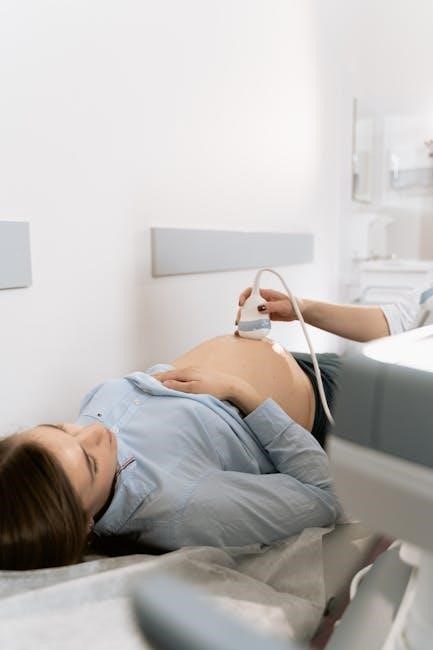
Related Procedures & CPT Codes
CPT code 76536 covers thyroid ultrasound, while 60661 is for ablation. Biopsy procedures utilize 10005/10006 or 60100 for core biopsies.
CPT Code 76536: Thyroid Ultrasound
CPT code 76536 specifically represents the diagnostic procedure of a thyroid ultrasound. This code encompasses the complete examination utilizing ultrasound technology to visualize the thyroid gland and identify any abnormalities, such as nodules or structural changes.
It’s crucial to understand that 76536 is reported for the entire ultrasound examination, regardless of whether it’s performed as a standalone diagnostic test or in conjunction with an ultrasound-guided biopsy. When a fine needle aspiration (FNA) biopsy is performed under ultrasound guidance, separate CPT codes (10005 and 10006) are used to report the biopsy component.
Therefore, if both an ultrasound and an ultrasound-guided FNA biopsy are performed during the same session, both 76536 and the appropriate FNA biopsy code(s) should be submitted for reimbursement.
CPT Code 60661: Ablation of Thyroid Nodule(s)
CPT code 60661 describes the percutaneous ablation of one or more thyroid nodule(s) utilizing imaging guidance, typically ultrasound. This procedure involves destroying thyroid nodule tissue, often using radiofrequency or microwave energy, to reduce nodule size and alleviate symptoms.
Importantly, 60661 is an add-on code, meaning it requires a primary procedure code to be reported in conjunction. The primary procedure is often the ultrasound guidance itself, represented by other CPT codes. When ablating additional lobes during the same session, further coding may be necessary.
Accurate documentation detailing the ablation technique, imaging guidance used, and number of nodules treated is essential for proper billing and reimbursement of CPT code 60661.

Documentation Requirements for Accurate Coding
Detailed procedure notes, including nodule characteristics, laterality (right/left thyroid), and imaging guidance used, are crucial for supporting correct CPT code assignment.
Importance of Detailed Procedure Notes
Comprehensive procedure notes are paramount for justifying the CPT codes billed for an ultrasound-guided thyroid biopsy. These notes should meticulously document the number of nodules biopsied, clearly differentiating between the initial lesion (coded with 10005) and any additional lesions (coded with 10006).
Specifically, the documentation must include the size, location, and characteristics of each nodule, as observed during the ultrasound examination. The type of needle used, the number of passes performed per nodule, and any complications encountered should also be recorded. Accurate laterality – specifying whether the nodule is located in the right or left lobe of the thyroid – is essential.
Without such detailed documentation, claims may be denied or subject to audit, potentially leading to financial penalties. Thorough notes demonstrate medical necessity and support accurate coding practices.
Reporting Laterality (Right vs. Left Thyroid)
Accurate reporting of laterality – distinguishing between the right and left thyroid lobe – is crucial for precise CPT coding during an ultrasound-guided biopsy. While CPT codes themselves don’t inherently specify laterality, clear documentation is vital for supporting the medical necessity of the procedure and avoiding potential claim denials.
Procedure notes must explicitly state whether the biopsied nodule(s) are located in the right lobe, the left lobe, or if they involve both lobes. This detail is particularly important when multiple nodules are biopsied in a single session, requiring the use of add-on code 10006.
Consistent and precise laterality reporting ensures accurate billing and reflects the scope of the performed procedure.

Common Coding Errors to Avoid
Frequent errors include incorrect use of add-on codes (10006) and insufficient documentation supporting medical necessity for ultrasound-guided thyroid biopsies (CPT 10005).
Incorrect Use of Add-on Codes
A common coding mistake involves misapplying CPT code 10006, designated as an add-on code for each additional lesion biopsied during an ultrasound-guided thyroid procedure. This code requires that 10005 (first lesion) is first reported on the claim.
Billing 10006 without the primary code 10005 will likely result in claim denials or rejections. Furthermore, accurately documenting each distinct nodule biopsied is crucial; simply stating “multiple nodules” isn’t sufficient. Each lesion must be individually identified and its biopsy clearly delineated in the procedure notes.
Payers scrutinize add-on code usage, so precise documentation and correct sequencing are paramount for successful reimbursement. Remember, 10006 is not a standalone code.
Insufficient Documentation
Incomplete or vague procedure notes are a primary driver of claim denials for ultrasound-guided thyroid biopsies. Documentation must clearly detail the number of nodules biopsied, their location (right, left, or isthmus), and the technique used – fine needle aspiration (FNA) or core biopsy.
Simply stating a “thyroid nodule biopsy” isn’t enough. Specificity is key. The report should also indicate if imaging guidance (CPT 76536) was utilized and justify the use of add-on code 10006 for each additional lesion.
Lack of laterality reporting (right vs. left) can also lead to coding errors. Thorough documentation supports medical necessity and accurate CPT code assignment, ensuring proper reimbursement.
Resources for CPT Coding Information
The American Medical Association (AMA) CPT manual and payer-specific guidelines are essential for accurate thyroid biopsy coding, including CPT codes 10005, 10006, and 76536.
American Medical Association (AMA) CPT Manual
The American Medical Association’s (AMA) Current Procedural Terminology (CPT) manual is the definitive source for CPT code descriptions and guidelines. For ultrasound-guided thyroid biopsies, it details codes like 10005 for the initial lesion and 10006 for each additional lesion biopsied during the same session.
This manual provides crucial information regarding code updates, revisions, and specific instructions for reporting these procedures accurately. It clarifies the appropriate use of codes like 60100 for percutaneous core biopsies and 76536 for diagnostic thyroid ultrasounds.
Investing in an updated CPT manual ensures coders and billers have access to the most current coding standards, minimizing claim denials and maximizing appropriate reimbursement for thyroid biopsy services.
Coding and Billing Guidelines from Payers
Payers, including Medicare and private insurance companies, often have specific coding and billing guidelines that supplement the AMA CPT manual for ultrasound-guided thyroid biopsies. These guidelines may dictate requirements for documentation, modifier usage, and acceptable coding practices.
It’s crucial to review each payer’s policies regarding CPT codes 10005, 10006, 60100, and 76536 to ensure claims are submitted correctly and avoid denials. Payers may have Local Coverage Determinations (LCDs) outlining medical necessity criteria for these procedures.
Adhering to payer-specific guidelines, alongside accurate CPT coding, is essential for successful claim processing and appropriate reimbursement for thyroid nodule evaluations.